Black Friday week

Black Friday week

📄 Digital book in PDF · read it on your phone or print it

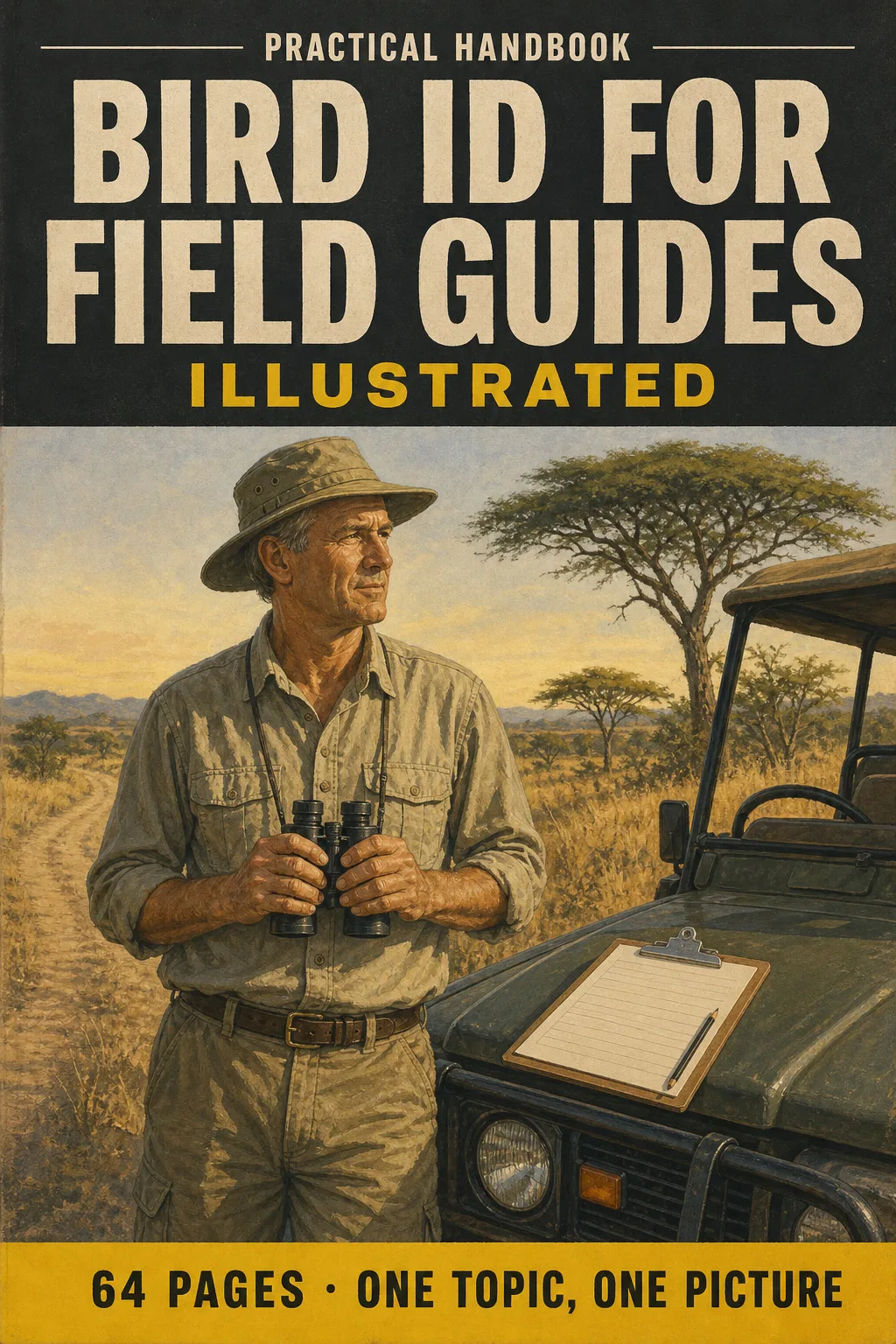
Bushveld Bird ID for Field Guides, in Drawings One Order for Every Bird

The size ladder, bills and legs, head markings, bushveld habitats, calls, raptors in flight, white egrets, hornbills and look-alike pairs. Every topic has its own page: first the drawing, then what you need to remember. 64 illustrated pages.

START IDENTIFYING IN ORDER

🔒 Secure checkout · PDF by email · 30-day guarantee

Every topic, its own pageEach clue drawn, with the explanation beside it
64 illustrated pages9 parts, from the six-step order to the drive checklist
Up-to-date sourcesChecked against the FGASA Apprentice Field Guide bird topics and the BirdLife South Africa checklist
PDF by emailFormat

Look Inside the Book

Every page has one large drawing and a box with the clues and steps you need to know:

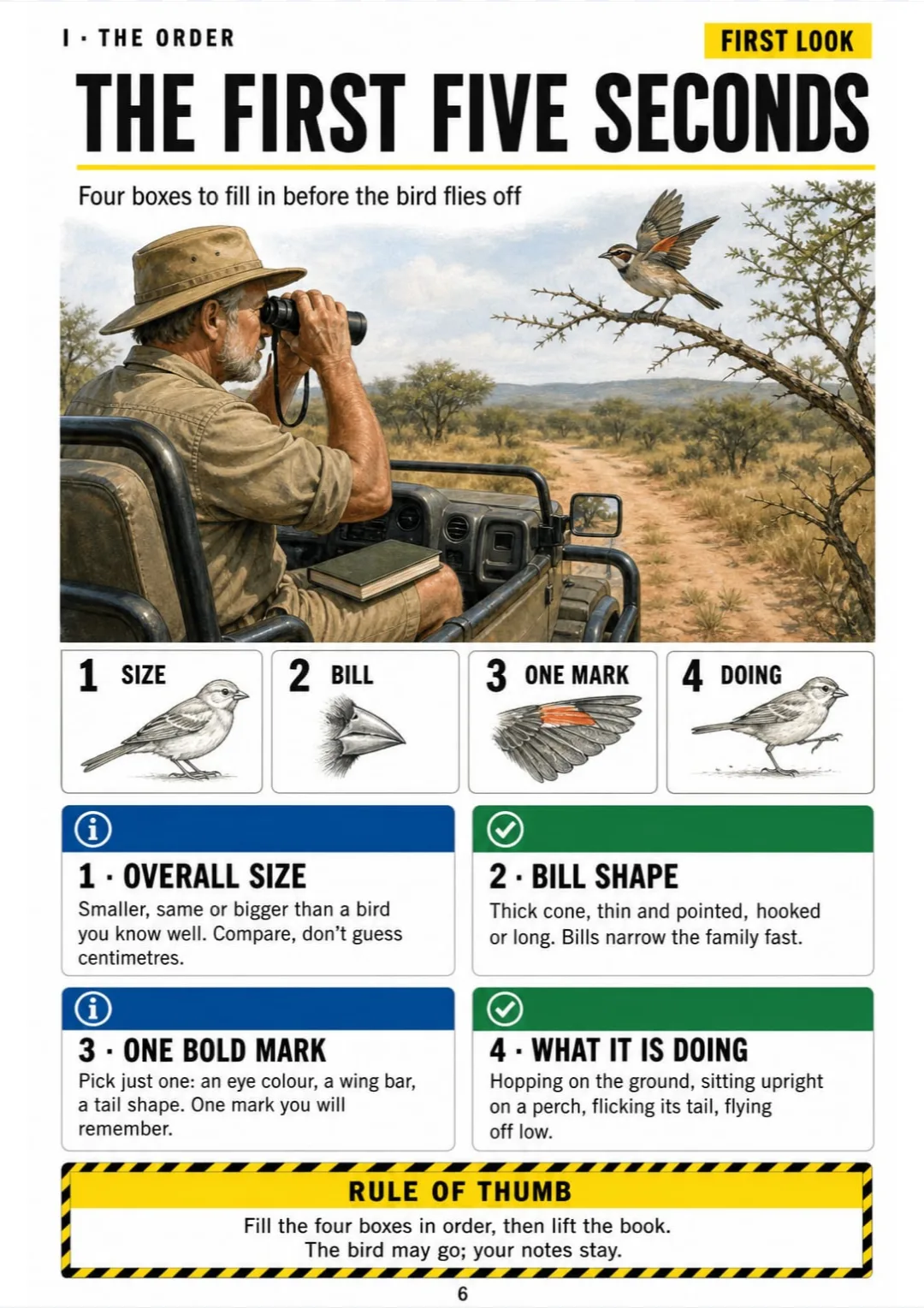
Size, bill, one bold mark, what it's doing: four boxes in that order.
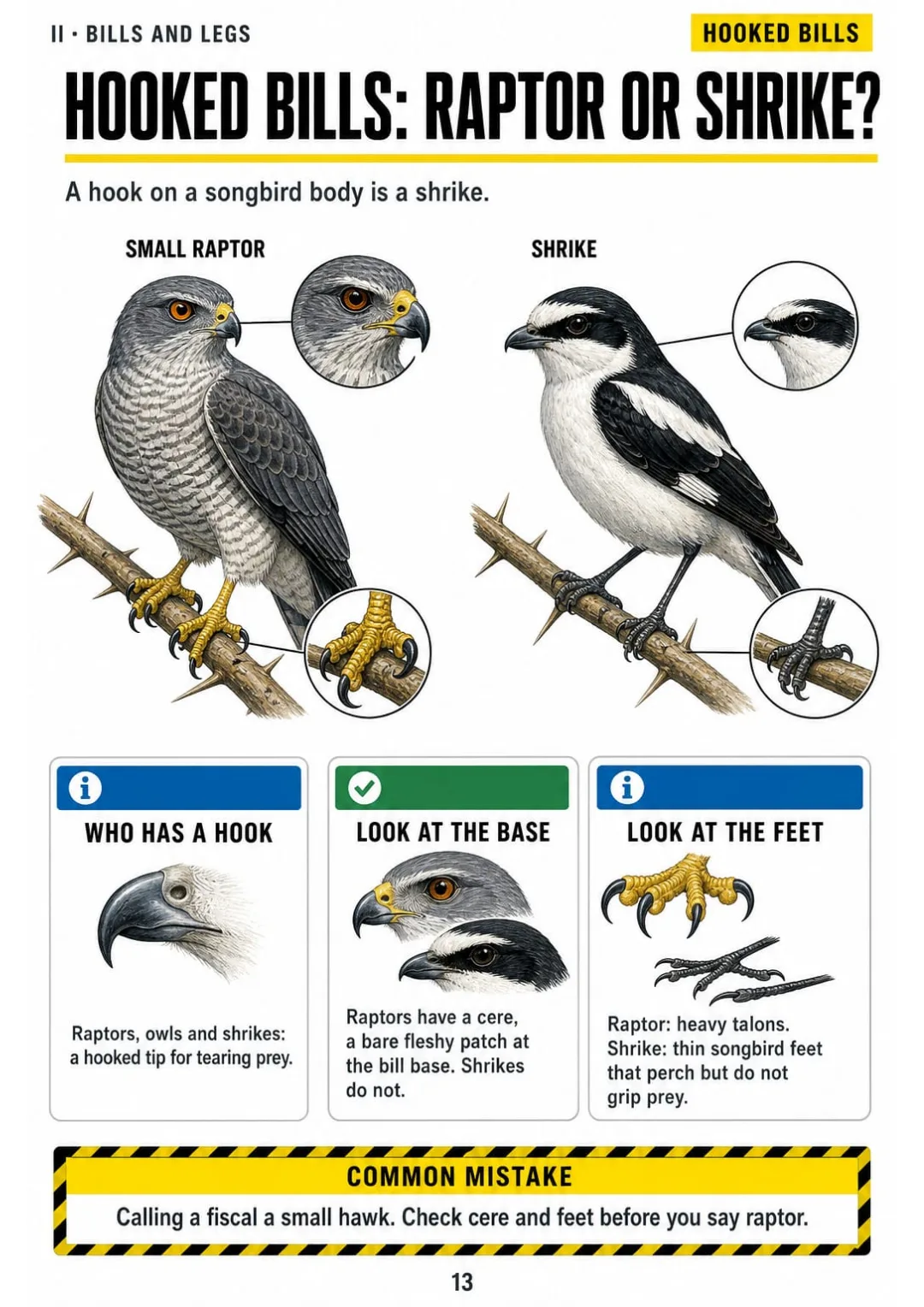
Hook + cere + talons = raptor. Hook + songbird feet = shrike.
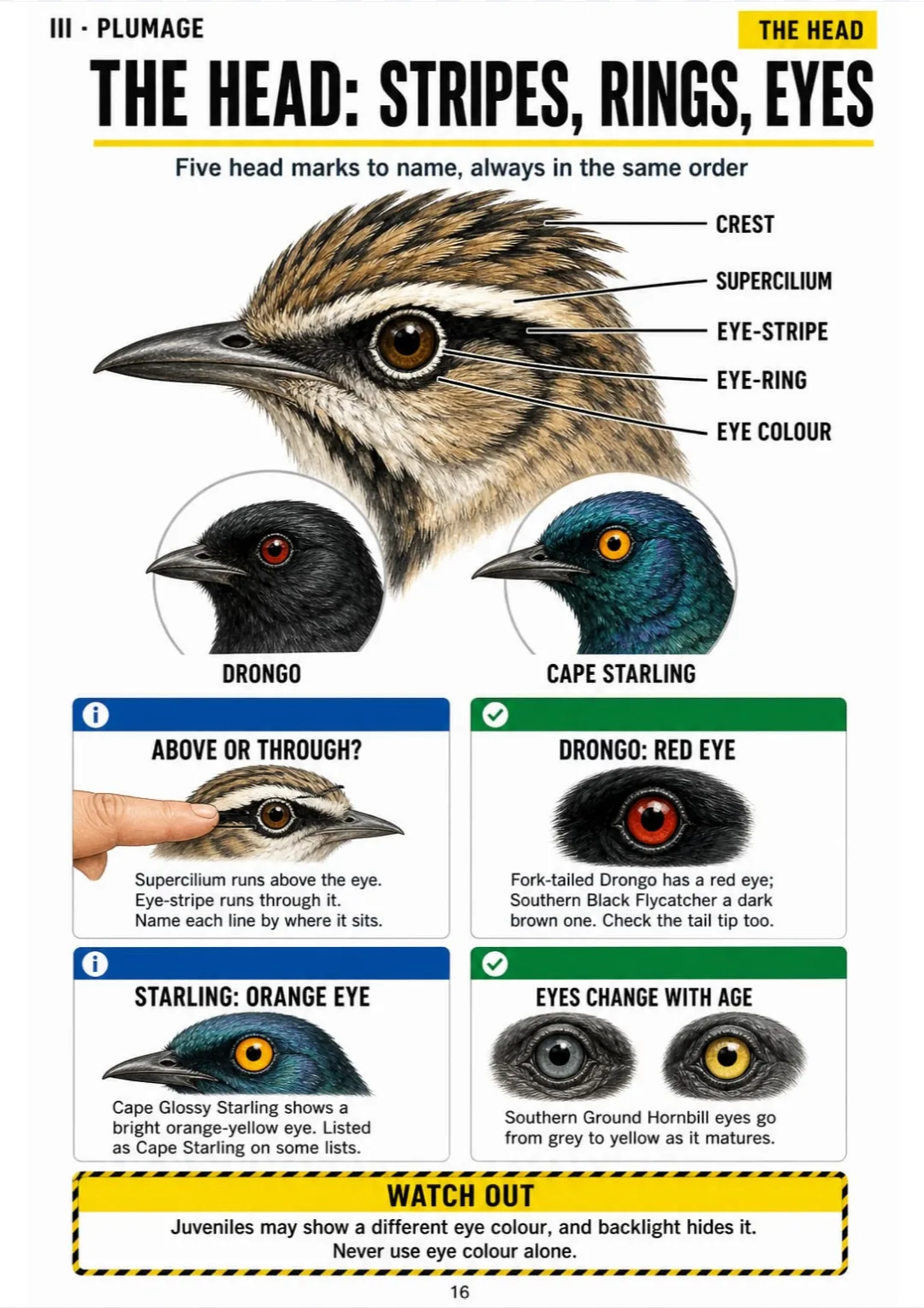
Supercilium, eye-stripe, eye-ring, crest and eye colour, marked on one head
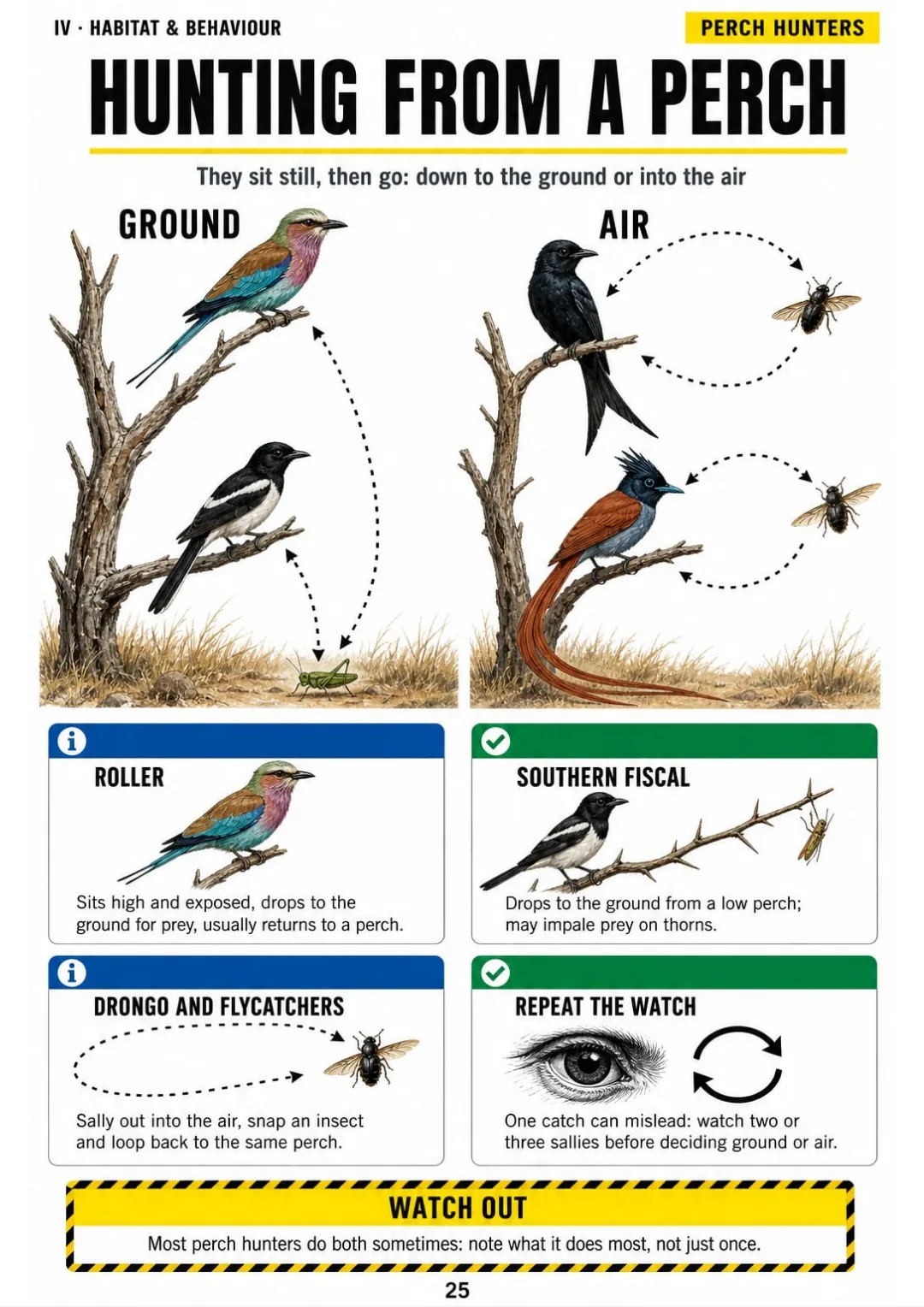
Rollers and fiscals drop to the ground; drongos and flycatchers catch in the air.
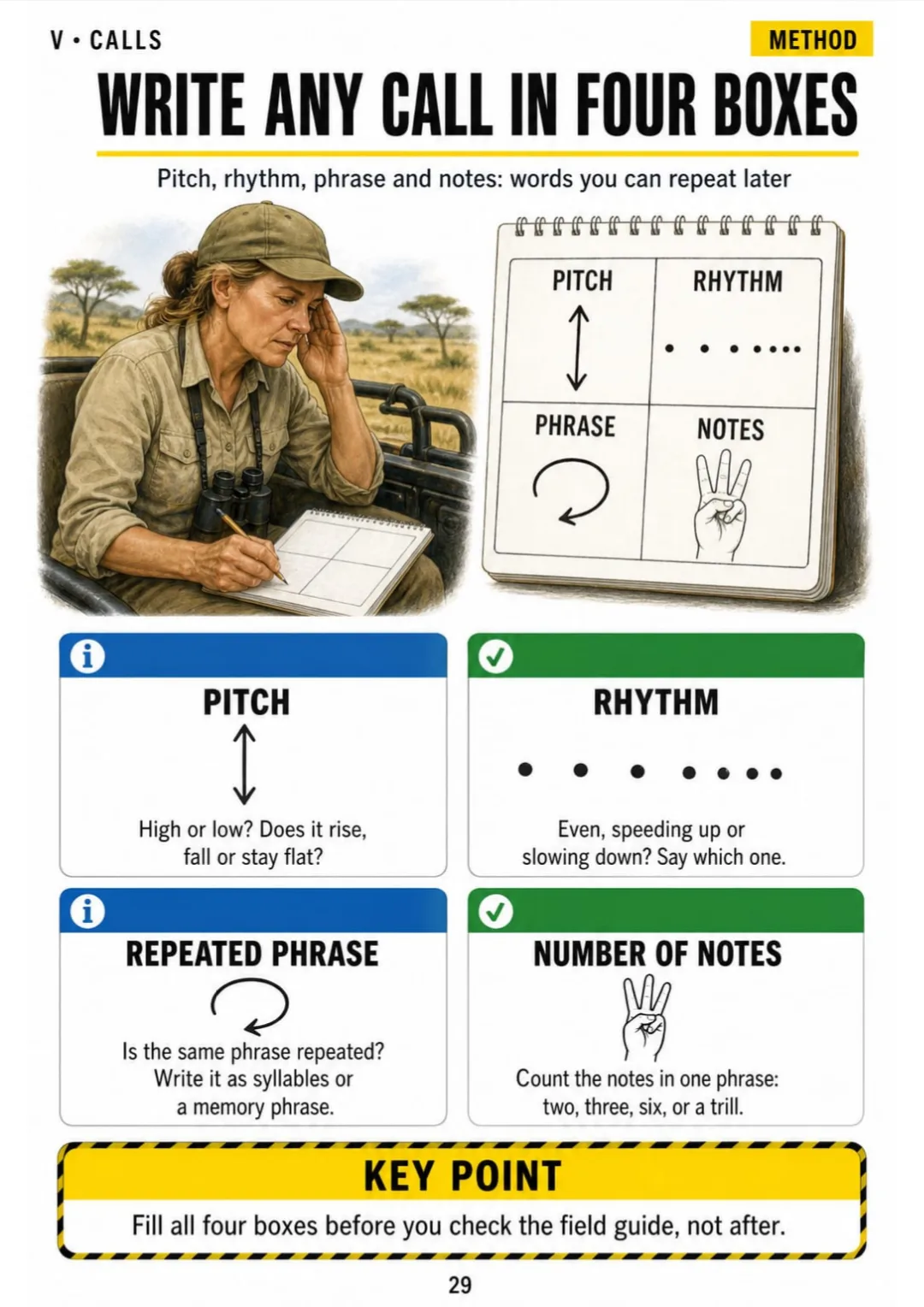
Four boxes to write any call in words: pitch, rhythm, phrase, notes
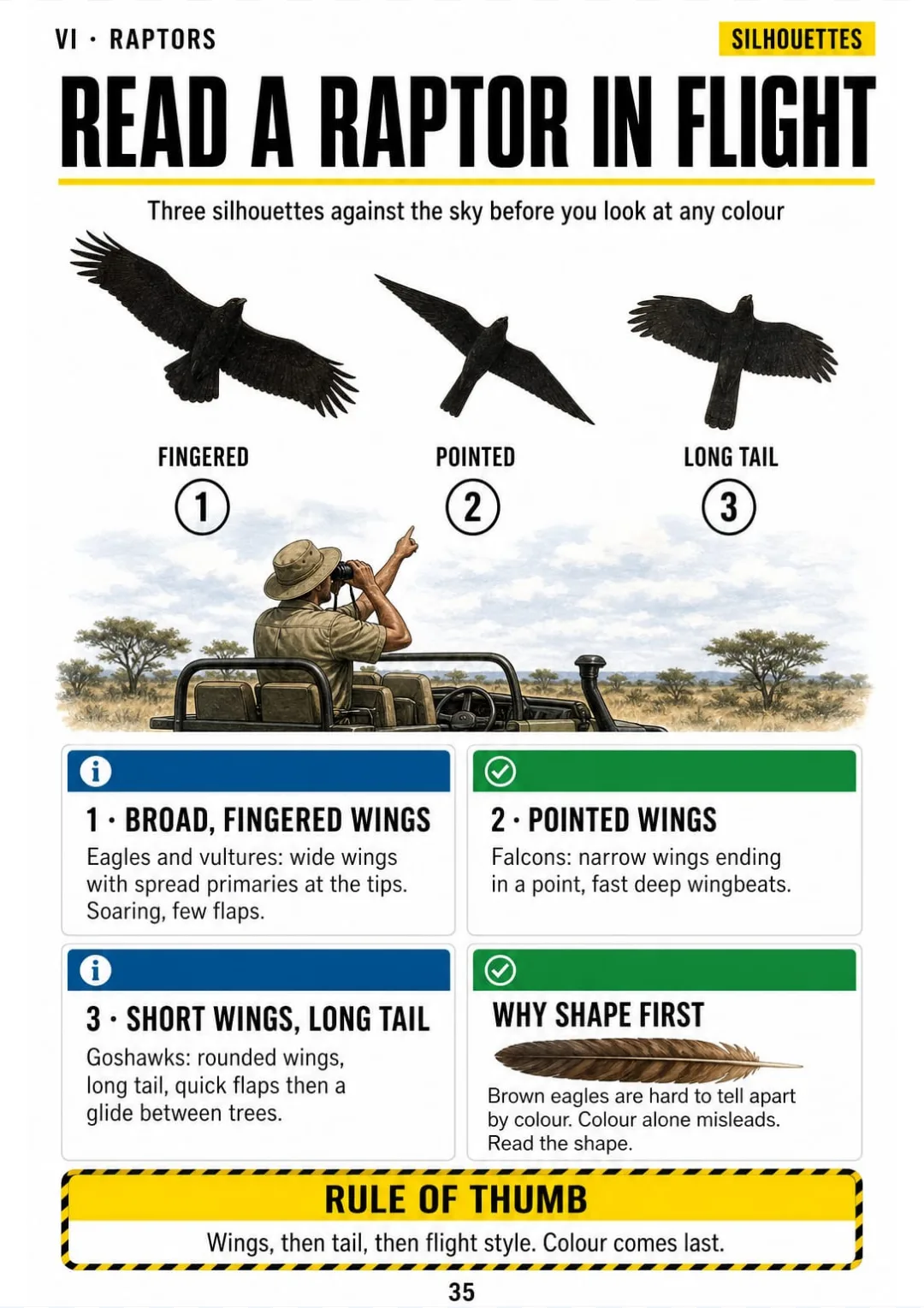
Three silhouettes: fingered wings, pointed wings, long tail. Shape before colour.
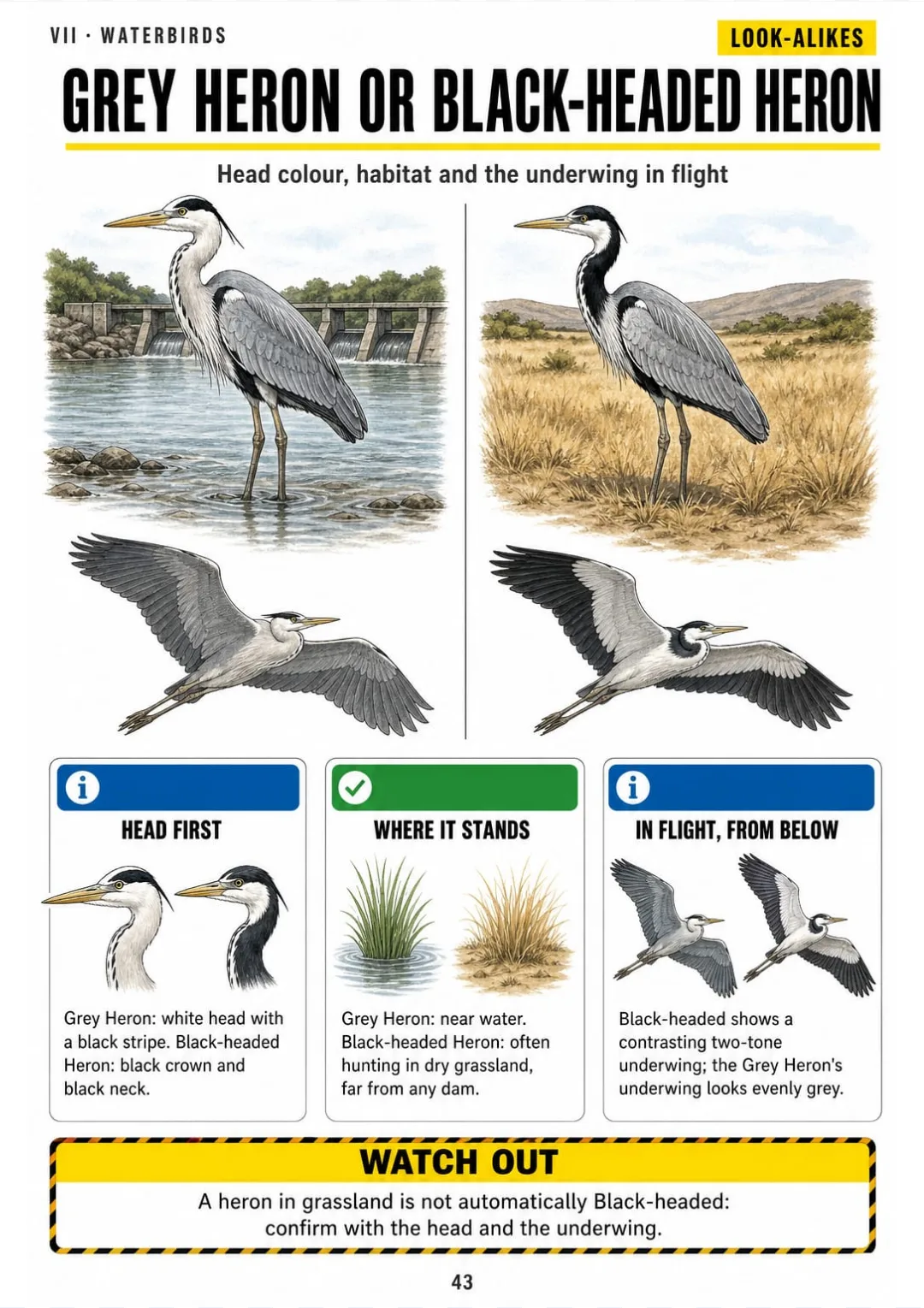
Black-headed Heron: black crown and neck, dry grassland, two-tone underwing in flight.
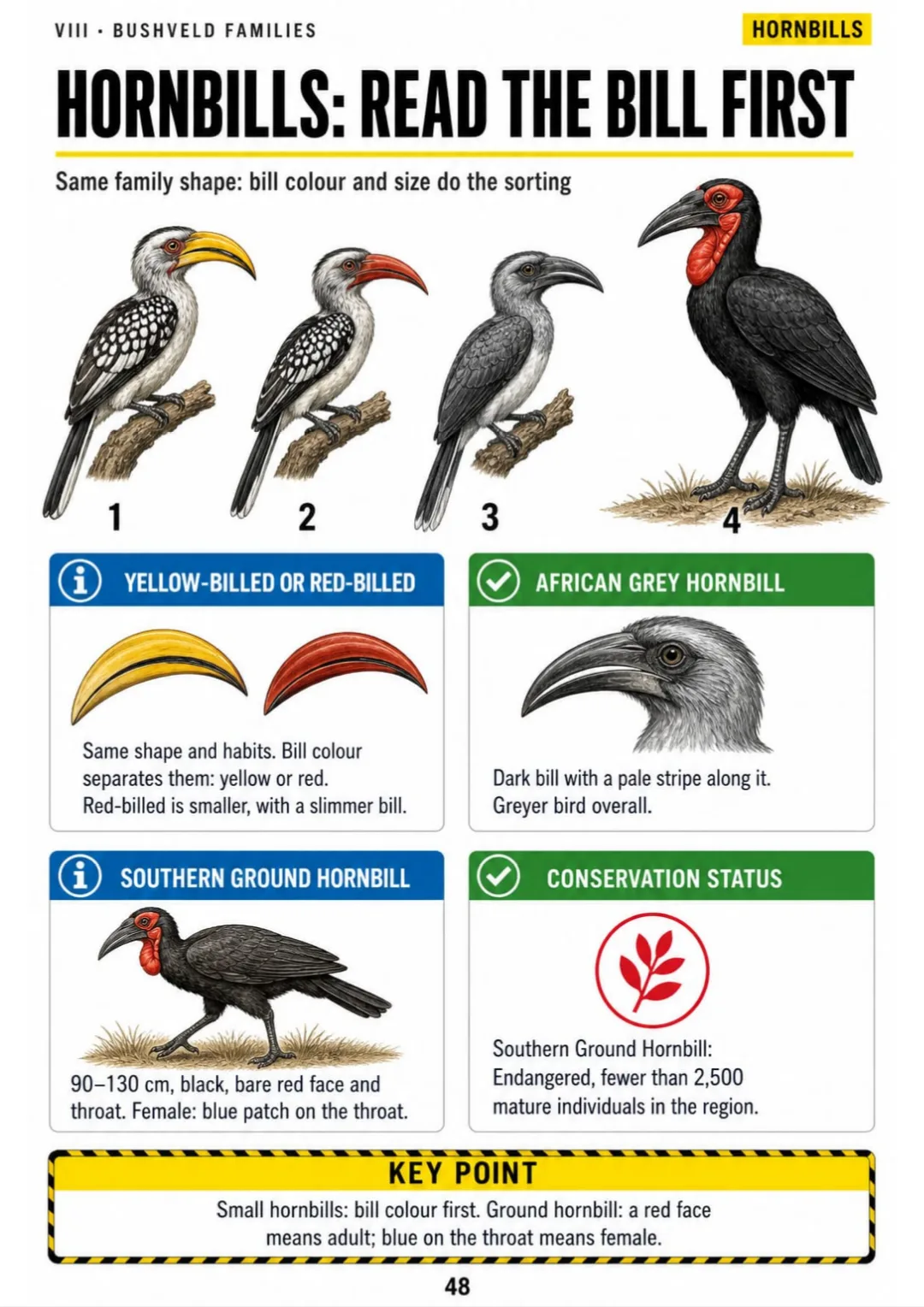
Yellow, red or dark bill with a stripe: three hornbills sorted by the bill alone.

Swipe to see more →

These are real pages from the book. The table of contents is the full one: 9 parts and 60 topics.

The Problem Isn't You. It's How It Was Explained to You.

You're on a morning drive. A guest points at a small brown bird on an acacia branch, and you see its head for two seconds before it turns away. Everyone in the vehicle is waiting for a name.

Your bird book has that bird on a plate, somewhere among hundreds of species sorted by family. To find the right plate, you first need to know what you're looking at, and by then the bird has turned away.

Supercilium, eye-stripe, eye-ring, crest and eye colour, marked on one head

In this book, that head is one drawing. The supercilium, the eye-stripe, the eye-ring, the crest and the eye colour are each marked where they sit, so you know what to look at in those two seconds.

The same goes for the size ladder, cone bills and hooked bills, raptors overhead, the four white egrets and the hornbills: each one has its own page.

So when the guest points, you look in the right place, in the same order, and give your answer without reaching for the book.

COMPARE FOR YOURSELF

The Same Topic, Two Ways to Learn It

THIS
  • The field guide: lines and lines of text
  • Bills and feeding explained only in words
  • You reach the drive still unsure
Granivorous passerines are characterised by a short, deep, conical bill adapted for husking seeds, with the mandibles exerting considerable force at the base. This morphology occurs in several unrelated families, including the Ploceidae, Estrildidae, Fringillidae and Passeridae, and should not in itself be regarded as diagnostic at species level. Bill depth, culmen profile and colour of the maxilla vary with sex, age and season, and must be considered together with plumage, habitat and vocalisation before a determination is made.
FOR THIS
  • The cone bill in one drawing
  • The seed-eaters listed in a box
  • You see it and you get it
Hook + cere + talons = raptor. Hook + songbird feet = shrike.
CONTENTS

Take a Look at the 9 Parts and 60 Topics

The six-step order, bills and legs, plumage, habitat and behaviour, calls, raptors in flight, waterbirds, bushveld families and look-alike pairs, and practice for the drive: 64 pages, all illustrated.

IThe Order: First Glance to Final Answer · pp. 5-10
  1. Why You Go Blank, and the Six-Step Order
  2. The First Five Seconds: What to Look At
  3. The Size Ladder
  4. Shape and Posture
  5. The Parts of a Bird on One Drawing
  6. From Family to Species
IIBills and Legs: What It Eats, Where It Stands · pp. 11-15
  1. Thick Cone Bills: Seed-Eaters
  2. Thin and Pointed Bills: Insect-Eaters
  3. Hooked Bills
  4. Dagger, Probe and Specialist Bills
  5. Feet and Legs
IIIPlumage: Where to Look on the Bird · pp. 16-21
  1. The Head: Stripes, Rings and Eye Colour
  2. Wings and Tail
  3. Underparts and Rump
  4. Male, Female and Juvenile
  5. Breeding and Non-Breeding Plumage
  6. Light Tricks Colours
IVHabitat and Behaviour · pp. 22-28
  1. Bushveld Habitats at a Glance
  2. Feeding Height
  3. How It Flies
  4. Hunting from a Perch
  5. Flocks, Pairs and Singles
  6. Habits You Can Name a Bird By
  7. Season and Region
VCalls: Remember Them and Explain Them · pp. 29-34
  1. How to Describe a Call
  2. Doves by Call
  3. Duets and Contact Calls
  4. Calls You Hear Before You See the Bird
  5. Night Calls
  6. When the Call Is the Only Answer
VIRaptors in Flight · pp. 35-41
  1. Read a Raptor in Flight: Wings, Tail, Style
  2. Vultures Overhead
  3. Bateleur
  4. Tawny Eagle or Wahlberg's Eagle
  5. Snake Eagles
  6. Kites and the African Fish Eagle
  7. Goshawks and Falcons
VIIWaterbirds · pp. 42-47
  1. White Egrets
  2. Grey Heron or Black-Headed Heron
  3. Storks
  4. Hamerkop, Spoonbill and Ibises
  5. Water Kingfishers
  6. Geese, Ducks and Jacanas
VIIIBushveld Families and Look-Alike Pairs · pp. 48-59
  1. Hornbills
  2. Fork-Tailed Drongo or Southern Black Flycatcher
  3. Rollers
  4. Glossy Starlings
  5. Oxpeckers
  6. Shrikes and Bush-Shrikes
  7. Spurfowl and Francolins
  8. Barbets and Woodpeckers
  9. Go-Away-Bird, Turaco and Coucal
  10. Bee-Eaters
  11. Woodland or Brown-Hooded Kingfisher
  12. Little Brown Birds: Where to Start
IXOn the Drive: Practice and Review · pp. 60-64
  1. Showing a Bird to Guests
  2. Saying "I'm Not Sure" Without Losing Face
  3. Taking Notes Before It Flies
  4. The Most Frequent ID Mistakes
  5. The Six-Step Checklist

One Page, One Topic, All Clear

Think of it this way:

A bird lands on a dead branch beside the road and you have a few seconds before it flies. The guests have their cameras up, and they're looking at you.

You went through the six-step page the night before: one bird, six arrows. So your eyes go to size and shape, bill and legs, plumage, habitat, behaviour and call, in that order, without opening the book.

Four boxes to write any call in words: pitch, rhythm, phrase, notes

It's the same with the size ladder, bills sorted by what they eat, raptors drawn side by side in flight, the white egrets and the bushveld calls: each one on its own page.

Bird ID for Field Guides Illustrated is 9 parts and 60 topics, all drawn, and it ends with practice for the drive: showing a bird to guests, taking notes before it flies, the most frequent ID mistakes and the six-step checklist.

What you see drawn, you don't have to memorize.

What's Inside Bird ID for Field Guides Illustrated:

Ipp. 5-10

The Order: First Glance to Final Answer

Why you go blank and the six-step order, the first five seconds, the size ladder, shape and posture, the parts of a bird and going from family to species.

IIpp. 11-15

Bills and Legs: What It Eats, Where It Stands

Cone bills for seed-eaters, thin bills for insect-eaters, hooked, dagger and probe bills, and what feet and legs tell you.

IIIpp. 16-21

Plumage: Where to Look on the Bird

Head stripes, rings and eye colour, wings and tail, underparts and rump, male, female and juvenile, breeding plumage and how light tricks colours.

IVpp. 22-28

Habitat and Behaviour

Bushveld habitats at a glance, feeding height, flight style, hunting from a perch, flocks and pairs, habits you can name a bird by, season and region.

Vpp. 29-34

Calls: Remember Them and Explain Them

How to describe a call, doves by call, duets and contact calls, calls you hear before you see the bird, night calls and when the call is the only answer.

VIpp. 35-41

Raptors in Flight

Reading a raptor in flight, vultures, the Bateleur, Tawny or Wahlberg's Eagle, snake eagles, kites and the African Fish Eagle, goshawks and falcons.

VIIpp. 42-47

Waterbirds

White egrets, Grey or Black-headed Heron, storks, Hamerkop, spoonbill and ibises, water kingfishers, geese, ducks and jacanas.

VIIIpp. 48-59

Bushveld Families and Look-Alike Pairs

Hornbills, drongo or flycatcher, rollers, glossy starlings, oxpeckers, shrikes, spurfowl, barbets and woodpeckers, go-away-bird and coucal, bee-eaters, kingfishers and little brown birds.

IXpp. 60-64

On the Drive: Practice and Review

Showing a bird to guests, saying “I'm not sure” without losing face, notes before it flies, the most frequent ID mistakes and the six-step checklist.

At the end of the book: Practice for the drive, the most frequent ID mistakes and a six-step checklist.
Plus: 2 Free Books

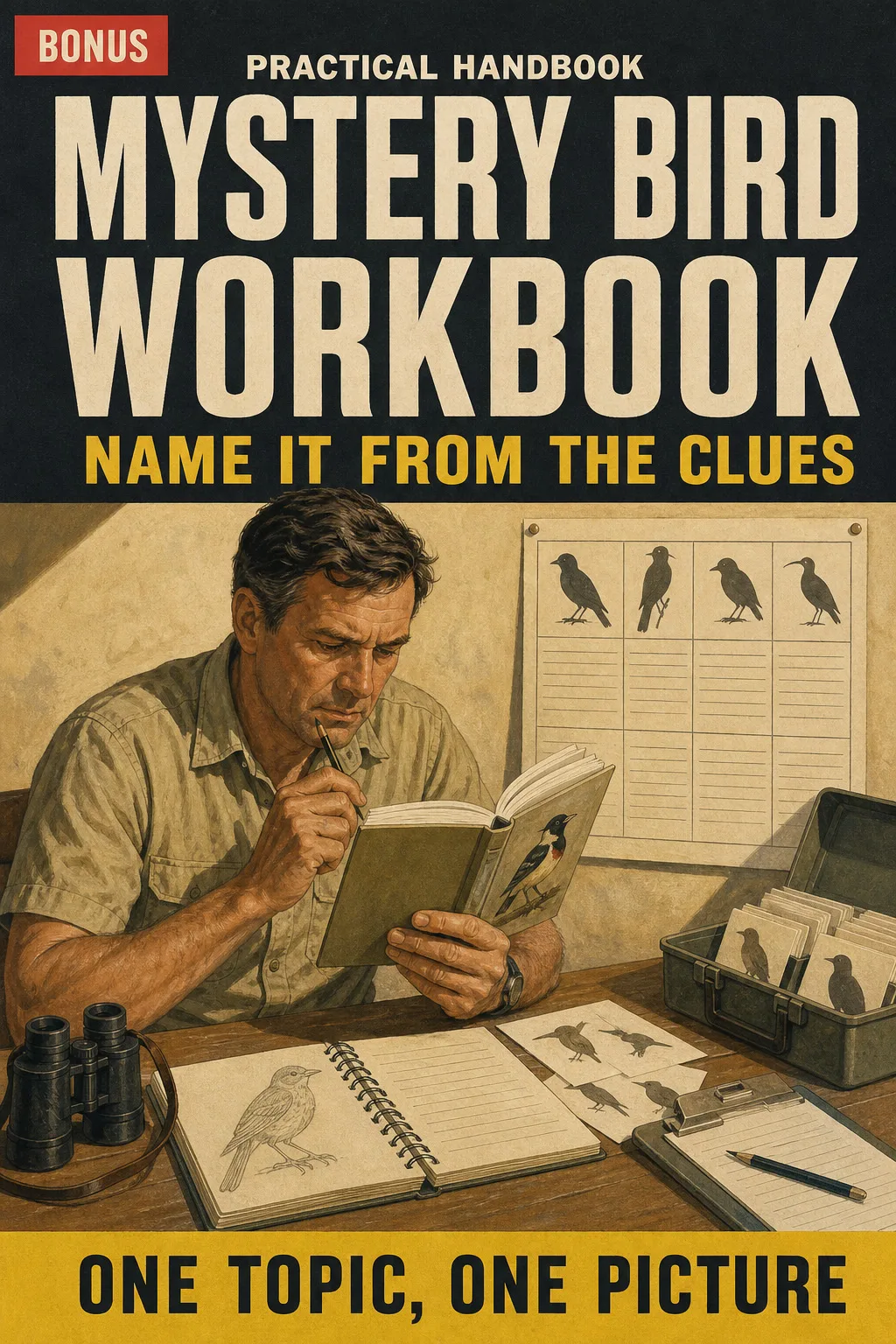
Mystery Bird Workbook: Name It From the Clues

BONUS 1: «Mystery Bird Workbook: Name It From the Clues»

Value on its own: US$ 17.90

Practise the order with drawn silhouettes, habitat scenes and calls written as notes, then check your answer on the next page.

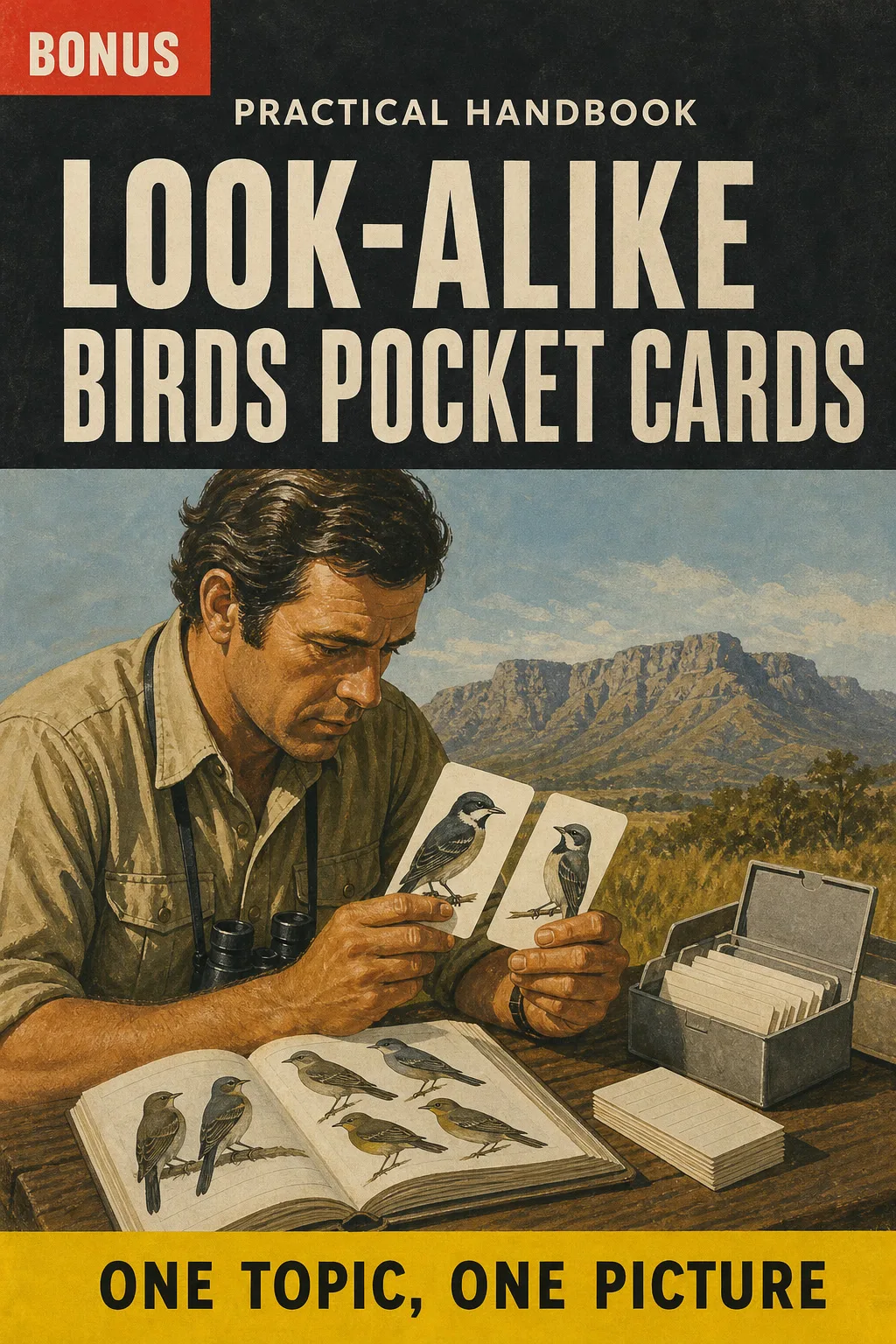
Look-Alike Birds Pocket Cards

BONUS 2: «Look-Alike Birds Pocket Cards»

Value on its own: US$ 14.90

Printable cards with the one feature that tells each look-alike pair apart, small enough to keep in the vehicle.

Black Friday week · ends 30 Nov

Bird ID for Field Guides Illustrated with 2 Free Books

  • Bird ID for Field Guides Illustrated: 64 illustrated pagesUS$ 63
  • BONUS 1: Mystery Bird Workbook: Name It From the CluesUS$ 17.90
  • BONUS 2: Look-Alike Birds Pocket CardsUS$ 14.90
  • High-resolution PDF to printIncluded
Total value US$ 95.80
BLACK FRIDAY PRICE:
US$ 27
You save US$ 68.80
YES, I WANT BIRD ID FOR FIELD GUIDES ILLUSTRATED FOR US$ 27

📄 This is a digital PDF book sent to your email: nothing is printed or shipped.

Secure purchaseEncrypted payment30-day guarantee

PDF by email: We email you Bird ID for Field Guides Illustrated as a PDF, together with the two free books. It's a single payment: no installments, no extra charges.

Who This Book Is For

You're learning to guide

You're learning to guide

You get one order for looking at any bird, so the field guide stops being hundreds of loose pages.

Your first drives with guests are coming up

Your first drives with guests are coming up

You see each topic on one page and know where to look before a guest points at something.

You already guide drives and walks

You already guide drives and walks

You review raptors, look-alikes and calls on the page you need, and print it for the vehicle.

Everything You Get Today

US$ 95.80US$ 27
YES, I WANT BIRD ID FOR FIELD GUIDES ILLUSTRATED FOR US$ 27

📄 This is a digital PDF book sent to your email: nothing is printed or shipped.

30DAYS
GUARANTEE

30-Day Guarantee

Try Bird ID for Field Guides Illustrated for 30 days, bonus books included.

We refund everything if the file won't open, if the book isn't what you see here, if you were charged twice or if the email doesn't arrive. Just email us.

You pay once. No subscriptions.

Frequently Asked Questions

I already have a bird book and a bird app. What does this add?

Your bird book and app are sorted by species: they help once you have a name. This book is sorted by clue: where to look first, in six steps, plus the clues that split look-alikes and raptors overhead. Use it alongside them, not instead. If you already know the common birds, the look-alike, raptor and call pages are where you'll spend your time.

Where does the content come from?

From the bird ID topics of South African field guide training, such as the FGASA Apprentice Field Guide level, with names checked against the BirdLife South Africa checklist. It covers bushveld birds (Lowveld, Limpopo, North West, KZN bushveld). Fynbos, Karoo and coastal specials are not covered.

Is it official material?

No. It's an independent illustrated book. It isn't affiliated with or endorsed by any training body, association, park or reserve, and it doesn't give you a certificate or count towards any qualification.

Does it replace field guide training?

No. It's material for studying and review. It doesn't replace your training, time in the field with a mentor or a full field guide: it helps you use them in order.

Are the practice exercises taken from a course or assessment?

No. The exercises in the Mystery Bird Workbook were written for this book. They aren't questions from any official course or assessment.

When and how does it arrive?

As PDFs by email: the book and the 2 bonus books, sent to the address you enter at checkout.

Do I have to pay every month?

No. It's a one-off payment, with no subscription.

Can I have it on paper?

Yes. The PDF is printable: print the pages you need, or the pocket cards, and keep them in the vehicle.

How does the refund work?

You have 30 days. We refund everything if the file won't open, if the book isn't what you see on this page, if you were charged twice or if the email doesn't arrive: just email us.

Before You Close This Page

No more rereading without it sticking.

The marks on a bird's head, drawn and done.

You start every drive knowing where to look on the bird.

Drawings make studying faster.

The book is right below.

One-time payment: US$ 27 · Guarantee: 30 days · PDF by email

YES, I WANT BIRD ID FOR FIELD GUIDES ILLUSTRATED FOR US$ 27

📄 This is a digital PDF book sent to your email: nothing is printed or shipped.